For Referring Physicians & Nurse Practitioners
Referring a patient.
How to refer to the practice, what to include so the referral can be triaged accurately on the day it arrives, and what your patient can expect afterwards. Referrals are accepted by fax from physicians and nurse practitioners anywhere in Ontario.
A referral is not needed for cosmetic rhinoplasty or non-surgical facial treatment, which patients arrange directly and which are not insured. Everything else on this page concerns care that is insured when medically necessary.
01 / 06
Scope of Practice
A subspecialty nose-and-sinus practice.
Dr. Khetani is a Royal College-certified otolaryngologist with fellowship training in rhinology and anterior skull base surgery. The practice concentrates on the nose and paranasal sinuses, and referrals are triaged with that focus in mind.
Referrals the practice is set up to assess:
- Nasal obstruction: deviated septum, turbinate hypertrophy, nasal valve collapse, obstruction after previous surgery or an old injury.
- Chronic rhinosinusitis, with or without nasal polyps, including disease that has persisted despite medical therapy or recurred after surgery.
- Recurrent acute sinusitis and complicated or atypical sinus infections.
- Loss or distortion of the sense of smell, once a nasal or sinus cause is suspected or needs to be excluded.
- Septal perforation, and functional or reconstructive rhinoplasty where breathing is affected.
- Assessment for biologic therapy in chronic rhinosinusitis with nasal polyps.
The office also sees hearing loss and tinnitus. The practice does not offer paediatric surgery, head and neck oncology, or sleep surgery; please refer those patients to the appropriate service. Recent nasal fractures are seen through the emergency department at Joseph Brant Hospital rather than by office referral.
If a referral concerns another area of otolaryngology, call the office before sending it. The team will say whether the concern fits the practice or whether another specialist would see your patient sooner.
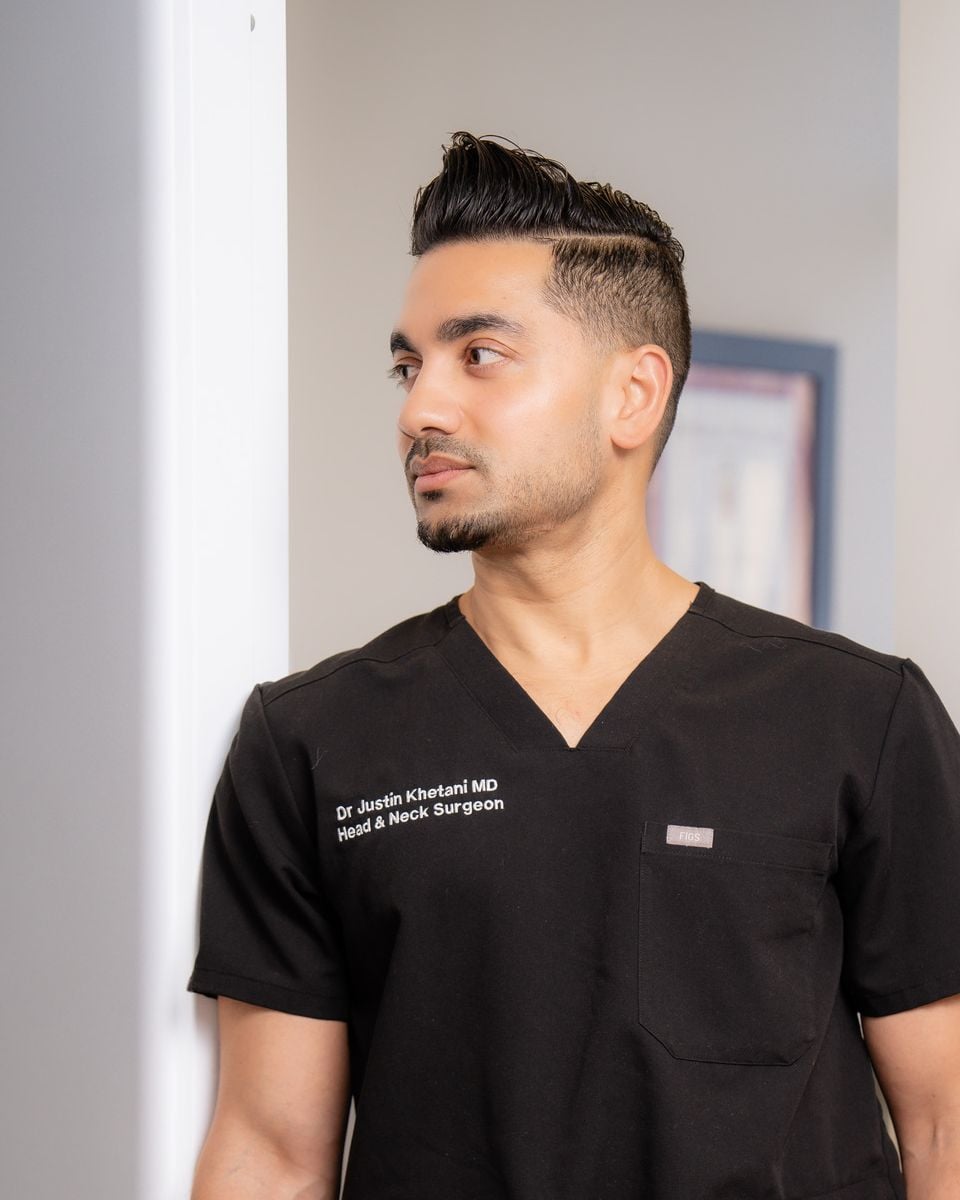
- CertificationFRCSC, Otolaryngology · Head & Neck Surgery
- FellowshipRhinology & Anterior Skull Base Surgery, University of Alberta
- HospitalsJoseph Brant Hospital, Burlington; Hamilton Health Sciences; St. Joseph's Healthcare Hamilton
- ListingCanadian Rhinologic Society directory of fellowship-trained rhinologists (CRSwNP)
Affiliations & registrations
Affiliations and registrations you can verify
-
 Royal College of Physicians and Surgeons of CanadaOtolaryngology – Head and Neck Surgery, 30 June 2012
Certified
Certification on the CPSO register (opens in a new tab)
Royal College of Physicians and Surgeons of CanadaOtolaryngology – Head and Neck Surgery, 30 June 2012
Certified
Certification on the CPSO register (opens in a new tab)
-
 College of Physicians and Surgeons of OntarioIndependent practice since 12 November 2012 · CPSO #86787
Registered
Public register (opens in a new tab)
College of Physicians and Surgeons of OntarioIndependent practice since 12 November 2012 · CPSO #86787
Registered
Public register (opens in a new tab)
-
 McMaster University, Department of SurgeryOtolaryngology
Assistant Clinical Professor (Adjunct)
Department directory (opens in a new tab)
McMaster University, Department of SurgeryOtolaryngology
Assistant Clinical Professor (Adjunct)
Department directory (opens in a new tab)
-
Rhinology & Endoscopic Skull Base Surgery Fellowship, McMaster UniversityProgram sheet, December 2021
Co-Director
Program sheet (CSO-HNS) (opens in a new tab)
-
 University of TorontoDoctor of Medicine, 2007
MD
Degree on the CPSO register (opens in a new tab)
University of TorontoDoctor of Medicine, 2007
MD
Degree on the CPSO register (opens in a new tab)
-
 University of AlbertaRhinology, Endoscopic Sinus & Anterior Skull Base Surgery, 2013
Fellowship
Fellowship, U of A Otolaryngology (opens in a new tab)
University of AlbertaRhinology, Endoscopic Sinus & Anterior Skull Base Surgery, 2013
Fellowship
Fellowship, U of A Otolaryngology (opens in a new tab)
-
 MacMINS · McMaster Skull Base GroupNorth American Skull Base Society Multidisciplinary Team of Distinction
Member
Members (opens in a new tab)
MacMINS · McMaster Skull Base GroupNorth American Skull Base Society Multidisciplinary Team of Distinction
Member
Members (opens in a new tab)
-
 Canadian Rhinologic SocietyDirectory of fellowship-trained rhinologists · CT-confirmed nasal polyps seen within four months
Listed
Directory (opens in a new tab)
Canadian Rhinologic SocietyDirectory of fellowship-trained rhinologists · CT-confirmed nasal polyps seen within four months
Listed
Directory (opens in a new tab)
-
 Canadian Academy of Facial Plastic and Reconstructive SurgeryFind-a-Surgeon directory
Member
Academy (opens in a new tab)
Canadian Academy of Facial Plastic and Reconstructive SurgeryFind-a-Surgeon directory
Member
Academy (opens in a new tab)
-
 American Rhinologic SocietyMembership stated at the practice's instruction; receipt kept on file
Member
Society (opens in a new tab)
American Rhinologic SocietyMembership stated at the practice's instruction; receipt kept on file
Member
Society (opens in a new tab)
-
 Hospital privilegesJoseph Brant Hospital · Hamilton Health Sciences · St. Joseph's Healthcare Hamilton
Privileges
Joseph Brant physician directory (opens in a new tab)
Hospital privilegesJoseph Brant Hospital · Hamilton Health Sciences · St. Joseph's Healthcare Hamilton
Privileges
Joseph Brant physician directory (opens in a new tab)
Membership or listing records a professional relationship, not an endorsement of this practice.
02 / 06
What to Include
What makes a referral easy to triage correctly.
Referrals are triaged by urgency and by what has already been tried. A referral with the items below can usually be booked on the first call to the patient; one without them often needs a call back to your office first.
Essential
- Patient name, date of birth, health card number with version code, and a telephone number the office may leave a message on.
- Referring clinician's name, billing number, telephone and fax, so the consultation note reaches you.
- The reason for referral, in a sentence, and how long the problem has been present.
- Treatment already tried and the response: intranasal corticosteroid (which one, for how long), saline irrigation, antibiotic courses, oral corticosteroid, antihistamine.
- Current medications and allergies, including anticoagulant or antiplatelet therapy.
- Relevant history: asthma, aspirin or NSAID sensitivity, immunosuppression, bleeding disorder, previous nasal or sinus surgery.
Helpful when available
- A CT sinus report, if a CT has already been done. This is what allows expedited triage under the Canadian Rhinologic Society directory listing. A CT is not required before referring: the practice arranges imaging when it is needed.
- Previous otolaryngology consultation notes, operative reports or pathology.
- Allergy testing results, and any sleep study if snoring or sleep-disordered breathing is part of the picture.
- For smell loss: the onset, any preceding viral illness or head injury, and whether taste and smell distortions accompany it.
- Anything that affects the visit itself: interpreter needs, mobility, or a preference for a particular time of day.
Your own EMR referral template is equally welcome. The form exists for convenience, not as a requirement, and a referral is not declined for arriving on different paper.
What to tell your patient about cost
Medically necessary nose and sinus surgery is insured under OHIP when medically necessary — OHIP pays the surgeon and the hospital. Surgery to change the appearance of the nose is not insured by OHIP. Where one operation addresses both breathing and appearance, the insured and uninsured parts are identified separately, in writing, before anything is decided — the details are at What OHIP covers.
03 / 06
Urgency & Timing
How referrals are prioritised.
Write the urgency on the referral itself. The office reads the first line before anything else, and a referral marked urgent is brought forward for review rather than waiting its turn.
| Situation | What to write on the referral | How it is handled |
|---|---|---|
| Nasal polyps on CT | "CRSwNP, CT confirmed", with the CT report attached and the treatment tried so far. | Expedited. The practice is listed in the Canadian Rhinologic Society's directory of fellowship-trained rhinologists, whose listed practices commit to assessing polyps confirmed on CT within four months of referral. Assessment covers surgical and biologic options. |
| Unilateral or atypical findings | "Urgent: unilateral", and the finding: one-sided polyp or mass, one-sided bloody discharge, progressive one-sided obstruction, facial numbness, or new visual symptoms. | Prioritised for early assessment with endoscopy and imaging, because a one-sided process is treated as a possible neoplasm until shown otherwise. |
| Chronic rhinosinusitis, nasal obstruction, smell loss | The duration, the treatment tried and the response. Note any asthma or aspirin sensitivity, and whether a CT has been done. | Routine, triaged by severity and by what has already been tried. The office tells the patient the expected wait when it calls to book. |
| Emergencies | Not a referral. Orbital swelling or visual change with sinusitis, severe or uncontrolled epistaxis, a suspected septal hematoma or abscess, or clear watery one-sided drainage after injury or surgery. | Direct the patient to the nearest emergency department. A fax cannot be relied on for anything that needs to happen today. |
Wait times for routine assessment vary with volumes. The office can give a current estimate by telephone, and it will tell you if a referral is missing something that would change its priority.
Access & wait times
- Chronic sinus disease, confirmed on CT
- Consultation within weeks of referral; surgery, where indicated, typically within about three months
- Nasal polyps (CRSwNP), confirmed on CT
- Assessment within four months of referral, under the Canadian Rhinologic Society directory of fellowship-trained rhinologists (opens in a new tab) commitment the practice is listed under
These are the practice's current patterns, not promises: individual timing depends on assessment, urgency and hospital scheduling.
Figures reviewed: September 2026
04 / 06
Before Referring
Medical therapy first, where it applies.
For chronic rhinosinusitis without red flags, Canadian rhinosinusitis guidelines support a trial of medical therapy in primary care before specialist referral: a daily intranasal corticosteroid used correctly, together with large-volume saline irrigation, with eight to twelve weeks generally regarded as a fair trial. Documenting that trial on the referral, including the product and the duration, is the single most useful thing a referral can carry, because it tells the practice where the patient is on the treatment pathway rather than starting again.
The trial should not delay referral where it does not apply. Polyps seen in clinic or on CT, one-sided findings, smell loss that is progressive or unexplained, or a patient with asthma and recurrent polyp disease all warrant referral without waiting for a further course of therapy.
Antibiotics deserve a specific mention. Repeated courses for chronic symptoms rarely change the disease and are not a prerequisite for referral. If a patient has had several courses in a year, say so; that pattern itself is a reason to be seen.
Nasal steroid spray
Name the product and the duration. Technique matters: aimed away from the septum, used daily rather than as needed. Eight to twelve weeks is a fair trial.
Saline irrigation
Large-volume irrigation (a squeeze bottle or neti pot, with sterile or boiled water), once or twice daily, rather than a saline mist.
Imaging
Not required before referral. If a CT has been done, attach the report. If it has not, the practice orders it when the examination calls for it.
Biologics
Assessment for biologic therapy in CRSwNP takes place here, after endoscopy and imaging confirm the diagnosis and the treatment history is clear. A referral does not need to request a specific medicine.
05 / 06
After You Fax
What happens next.
-
Received and logged
Incoming faxes are processed by the practice's intake system, which logs the referral and creates a task for the office team, so a referral is not waiting to be noticed in a paper tray.
-
Triaged
Referrals are reviewed for urgency and completeness. If something essential is missing, your office is contacted rather than the referral being set aside.
-
The patient is called
The office contacts the patient directly to arrange the consultation and to say what to bring. Your office does not need to book on the patient's behalf.
-
Consultation
History, examination and nasal endoscopy where indicated, with imaging arranged if required. Options are laid out with their trade-offs, and the patient is under no obligation to decide at the first visit.
-
A consultation note back to you
The findings, the diagnosis and the plan, including anything the practice would ask you to continue or monitor, are sent to the referring clinician after the visit.
Clinician to clinician
To discuss a case before referring
Call (905) 639-2244 and say that you are a referring clinician. The call is answered by the practice's AI phone assistant at any hour; your message is passed to the office team and, where a clinical conversation is needed, to Dr. Khetani. Post-operative concerns about a patient you share are prioritised.
06 / 06
For Your Patient
Pages you can point patients to.
Written for patients, in plain language, and consistent with what they will hear at consultation.
Conditions
Deviated septum, nasal valve collapse, chronic sinusitis, nasal polyps and loss of smell: what each is, how it is assessed, and the options with their trade-offs.
The visit
How to get seen and what happens at the first consultation, including why clinical photographs may be taken and what the office may send afterwards.
If surgery follows
Preparation and recovery by procedure and post-operative instructions, so you can answer the questions patients bring back to you.
Fax referrals to (905) 639-2253.
Mark the urgency on the first line, note what has been tried, and attach any imaging report. The office will take it from there.