Chronic Sinusitis & Nasal Polyps
Endoscopic sinus surgery,when medical therapy isn't enough.
When chronic sinus disease doesn't respond to medical therapy, surgery can reopen the sinuses' natural drainage pathways, performed entirely through the nostrils. Planning and performing that operation is at the centre of Dr. Khetani's surgical practice.
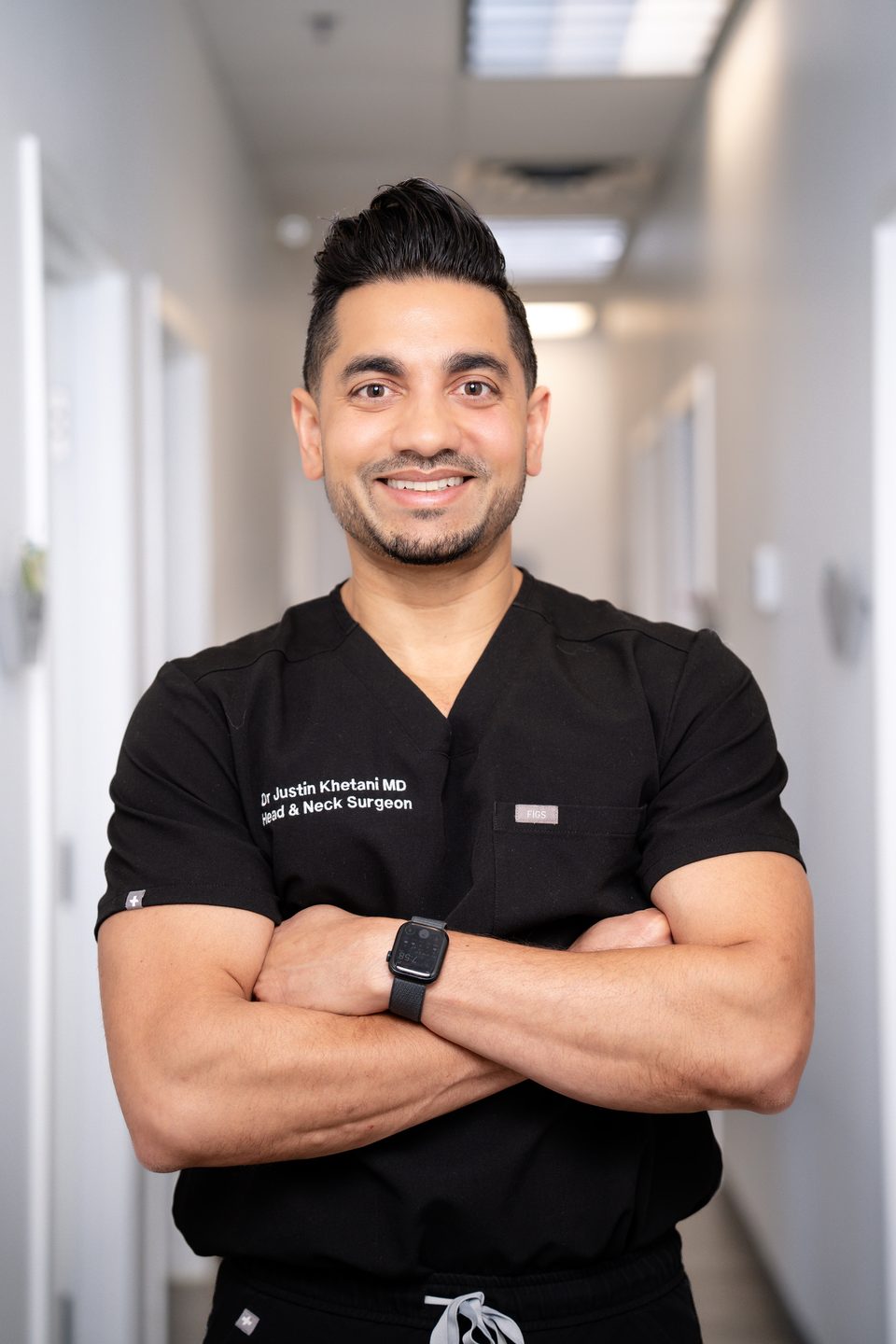
Dr. Justin Khetani is a fellowship-trained rhinologist (University of Alberta, 2013) and Royal College-certified otolaryngologist in Burlington, Ontario. He performs endoscopic sinus surgery at Joseph Brant Hospital and complex skull-base cases at Hamilton General with the McMaster Skull Base Group. An OHIP-insured assessment begins with a referral from your physician or nurse practitioner.
Written and reviewed by Dr. Justin Khetani, MD, FRCSC, Otolaryngology–Head and Neck Surgery · Last reviewed
Fellowship-trained rhinologist (University of Alberta) · Co-Director, Rhinology & Endoscopic Skull Base Surgery Fellowship, McMaster · MacMINS — McMaster Skull Base Group · MacMINS members (opens in a new tab)
- Coverage
- Insured under OHIP when medically necessary — OHIP pays the surgeon and the hospital.
- Referral
- Begins with a referral from your physician or nurse practitioner.
General guidance only. Your diagnosis, plan, recovery and coverage are individual, and are confirmed at your consultation.
The Condition
Medicine first. Surgery when it's earned.
Chronic rhinosinusitis means the lining of the sinuses stays inflamed for twelve weeks or longer: nasal blockage, facial pressure, thick drainage and a reduced sense of smell that antibiotics alone never quite clear. In some patients the inflamed lining also grows nasal polyps, which further block the nose and the sense of smell.
Treatment starts medically: saline rinses, intranasal sprays and structured courses of medication. For chronic sinusitis with nasal polyps, newer biologic medications are an option in appropriate patients; assessing who genuinely benefits from them is an area where Dr. Khetani is active in national clinical research. Medical management of nasal polyp disease, including that assessment for biologic therapy, is a core focus of the practice, and it begins the same way every time: with the diagnosis established properly before any treatment, medical or surgical, is chosen.
Surgery enters the conversation when structured medical therapy hasn't controlled the disease, or when the anatomy itself, confirmed by endoscopy and CT imaging, makes it unlikely ever to.
Chronic sinusitis, explained Nasal polyps, explained Loss of smell

Blocked, then opened
Fig. Left, a drainage pathway blocked by swollen lining; right, the same pathway opened through the nostril.
Nasal Polyps & Biologics
Medical management first, and taken seriously.
Chronic rhinosinusitis with nasal polyps (CRSwNP) is a chronic inflammatory disease, and the practice treats it as one. The first step is always a proper diagnosis: endoscopy, imaging where needed, and an honest account of what has already been tried. From there the options are laid out side by side, with what each can offer and what it asks of you, so that the decision is yours.
For many patients that means structured medical therapy: saline rinses, intranasal corticosteroid, and courses of medication used deliberately rather than repeatedly. For appropriate patients it means assessment for the newer biologic medicines, which target the inflammation that drives polyps. Dr. Khetani is an active investigator in Phase 3 clinical trials of these therapies and contributes to national specialist advisory work on emerging treatments, so that assessment reflects the current evidence rather than habit.
Surgery keeps its place: it is offered when medical therapy has been given a genuine trial and the anatomy or the disease still calls for it, and it is planned to work with ongoing medical care afterwards, not instead of it.
- ResearchPhase 3 clinical trial investigator, biologic therapies for CRSwNP
- AdvisoryContributor to national specialist advisory work on emerging therapies
- TrainingCo-Director, Rhinology & Endoscopic Skull Base Surgery Fellowship, McMaster University
Canadian Rhinologic Society · directory listing
Seen within four months.
The Burlington practice is listed in the society's directory of fellowship-trained rhinologists for CRSwNP: listed practices commit to seeing patients whose polyps are confirmed on CT within four months of referral. Ask your physician to note the CT findings on the referral.
Access & wait times
- Chronic sinus disease, confirmed on CT
- Consultation within weeks of referral; surgery, where indicated, typically within about three months
- Nasal polyps (CRSwNP), confirmed on CT
- Assessment within four months of referral, under the Canadian Rhinologic Society directory of fellowship-trained rhinologists (opens in a new tab) commitment the practice is listed under
These are the practice's current patterns, not promises: individual timing depends on assessment, urgency and hospital scheduling.
Figures reviewed: September 2026
The Operation
Through the nostrils, guided by the endoscope.
Endoscopic sinus surgery is performed under general anesthesia, usually as day surgery, entirely through the nostrils. There are no external incisions and no bruising of the face to explain afterwards. Using endoscopes and fine instruments, Dr. Khetani opens the sinuses' natural drainage pathways, removes polyps and obstructing tissue, and preserves the healthy lining the sinuses need to function.
The operation generally begins with the ethmoid sinuses, the honeycomb of small chambers between the eyes; opening them gives access to the neighbouring maxillary, frontal and sphenoid sinuses wherever the disease requires it, always preserving as much normal tissue as possible.
The goal is a nose and sinuses that drain, ventilate and respond to medication properly: surgery and ongoing medical care working together, not competing.
For complex and advanced disease (extensive polyps, revision cases, and conditions involving the anterior skull base), Dr. Khetani operates at Hamilton General Hospital as a surgical member of the McMaster Skull Base Group (MacMINS), a multidisciplinary team designated a Team of Distinction by the North American Skull Base Society.
Recovery
What recovery generally looks like.
Individual recoveries vary with the extent of surgery; these are the general patterns, refined in your written post-operative instructions.
Expect congestion and some blood-tinged drainage. The nose is healing on the inside even though nothing shows outside. Saline rinses begin as instructed and matter more than any other single step. Rest, keep your head elevated, and avoid blowing your nose or straining.
Most patients take about one to two weeks away from work depending on their role and how they feel, avoiding heavy exertion and lifting early on. Congestion improves as internal swelling settles. The early stuffiness is part of healing, not the final result.
Scheduled follow-ups are part of the operation's success: the healing sinus cavities are inspected and gently cleared as needed so they heal open rather than scarred. Keeping these visits matters as much as the surgery itself.
Chronic sinusitis is a chronic condition: surgery opens the anatomy, but ongoing care (rinses, sprays, and in some patients further medical treatment) keeps it controlled. Nasal polyps in particular can recur, which is discussed honestly before surgery and managed with a long-term plan afterwards.
Preparing for this operation: the patient guide The full post-operative instructions
The Honest Part
Precise surgery, near important structures.
The sinuses sit beside the eyes and beneath the floor of the skull, which is exactly why this surgery is a fellowship-level discipline.
Risks include bleeding, infection, the risks of general anesthesia, scarring or adhesions that can narrow the healed pathways, recurrence of disease (particularly polyps), and, rarely, injury to the eye or its muscles, or a leak of the fluid surrounding the brain, which can require further treatment.
The sense of smell deserves its own mention: it is often already reduced by the disease itself, and while it frequently improves once the sinuses are opened, a lasting decrease is also possible. Where smell matters particularly to you, raise it at consultation so it is weighed properly.
Serious complications are uncommon, and Dr. Khetani reviews the realistic risks of your operation, in the context of your imaging and your disease, before anything is decided. Anatomical knowledge is the foundation of keeping this surgery precise; it is what rhinology fellowship training exists to build.
Watch
Endoscopic sinus surgery, explained on camera.
Two short videos, in Dr. Khetani's own words: what the operation involves and the risks that come with operating beside the eyes and beneath the skull base, then what recovery and follow-up actually look like.
Video 1 of 2
The operation and its risks
Why medical therapy comes first, what the endoscope does, which sinuses are opened and why the healthy lining is preserved, and the risks reviewed at consultation: bleeding, infection, scarring, recurrence of polyps, changes in smell, and the rare but serious injuries near the eye and skull base.
About 5 minutes · captioned · general education, not advice about your case
Video 2 of 2
After sinus surgery: what to expect
Congestion and drainage in the first days, why saline rinses matter more than anything else, the debridement follow-up visits and what happens at them, returning to work, and the long-term plan that keeps chronic sinus disease controlled.
About 4 minutes · captioned · general education, not advice about your case
The videos are general education, recorded by Dr. Khetani for patients considering or recovering from this operation. They are not advice about your case: risks, recovery and results vary from person to person and are discussed with you individually.
Getting Assessed
From referral to plan.
Referral first
Sinus assessment generally begins with a referral from your physician or nurse practitioner, faxed to (905) 639-2253. Bring any prior imaging or treatment records you have. They genuinely help. Physicians: referral information.
Endoscopy & imaging
Assessment typically includes nasal endoscopy in clinic, and a sinus CT scan where surgery is being considered (the map the operation is planned on). The office arranges what's needed.
Every option on the table
Medical therapy, biologic treatment pathways for polyp disease, and surgery are weighed together. The recommendation you receive is the one that fits your disease, not a default.
The options, side by side
| Option | What it can offer | Trade-offs to weigh |
|---|---|---|
| Structured medical therapy | Saline rinses, intranasal sprays and courses of medication; the starting point for chronic sinus disease, and often enough. | Requires sustained daily effort, and where the anatomy itself is the obstacle, medication alone may never control the disease. |
| Biologic medication (nasal polyps) | An option for appropriate patients with chronic rhinosinusitis with nasal polyps, assessed individually. | Ongoing medical treatment rather than a one-time intervention, and suitability is a genuine specialist assessment, not a default. |
| Endoscopic sinus surgery | Reopens the sinuses' natural drainage pathways through the nostrils, so they ventilate and respond to medication properly. | Day surgery under general anesthesia with real risks; polyps can recur, and ongoing care is still part of the plan afterwards. |
These are not competitors; most patients use them in sequence or together. Which combination fits your disease is established from examination, endoscopy and imaging at consultation.
Common Questions
Sinus surgery, answered plainly.
Chronic rhinosinusitis is a chronic inflammatory condition, so the honest framing is control, not cure. Surgery opens the sinuses' drainage pathways so they can ventilate and respond to medical therapy properly; ongoing care keeps the disease controlled. Most patients pursue surgery to breathe better, get fewer infections and regain smell. These are realistic goals that are assessed individually.
They can. Polyps are a product of ongoing inflammation, and removing them does not remove the tendency to form them. That is why polyp disease is managed with a long-term plan: surgery where indicated, plus continuing medical care, with biologic medication an option for appropriate patients. Dr. Khetani is an active investigator in clinical research on chronic rhinosinusitis with nasal polyps.
Most patients describe pressure and congestion rather than severe pain, and discomfort is typically manageable with the medication plan provided. Because there are no external incisions, there is no facial wound to heal. Individual experiences vary, and what to expect in your case is discussed before surgery.
Where surgery is being considered, yes. A sinus CT shows each patient's individual anatomy and the extent of disease, and the operation is planned on it. If you already have recent imaging, bring the report and images to your consultation; if not, the office arranges it.
Endoscopic sinus surgery is insured under OHIP when medically necessary — OHIP pays the surgeon and the hospital. An OHIP-insured assessment begins with a referral from your physician or nurse practitioner. The details are on the What OHIP covers page.
Chronic sinus problems deserve a specialist look.
Ask your physician or nurse practitioner for a referral, or contact the office with questions about the process.
Referrals arrive from physicians across the region, from Hamilton, Stoney Creek, Ancaster, Dundas and Grimsby to Oakville, Milton, Georgetown, Brampton, St. Catharines and Niagara Falls. Consultations are held at the Burlington office, minutes from Highway 403, and surgery takes place in hospital in Burlington or Hamilton.